
Something is shifting in the yoga world.
In the space of a week, two major yoga businesses on opposite sides of the Atlantic closed their doors: Y7 shut all eight of its studios in the US, while here in London, triyoga (an institution for more than 25 years) closed, along with the other Common Bond brands.
For me, the closure of triyoga is deeply personal. I spent many years there, as did so many of the teachers who now teach at Mission. It played an enormous role in shaping London’s modern yoga community, and its loss is significant. We can acknowledge and mourn that, while also asking a bigger question: what does yoga look like from here?
Because I don’t think people are turning away from yoga. I think our understanding of what we need alongside it is growing.
Yoga has survived for thousands of years because it has never stood still. At its heart, yoga is a spiritual and philosophical practice; the physical practice is only one part of something much bigger. And the way we practise asana has itself continued to evolve.
What I think is changing now is our understanding of what our bodies actually need.
There was a time when I practised yoga six days a week. I thought yoga was all I needed. I was wrong.
The science around healthy ageing increasingly points us towards a more varied approach to movement. We need strength. We need cardiovascular fitness. We need mobility and balance. We need to maintain muscle and bone as we get older. And while yoga can contribute enormously to many of those things, it doesn’t have to be everything.
That doesn’t diminish yoga. If anything, I think it frees yoga to be yoga.
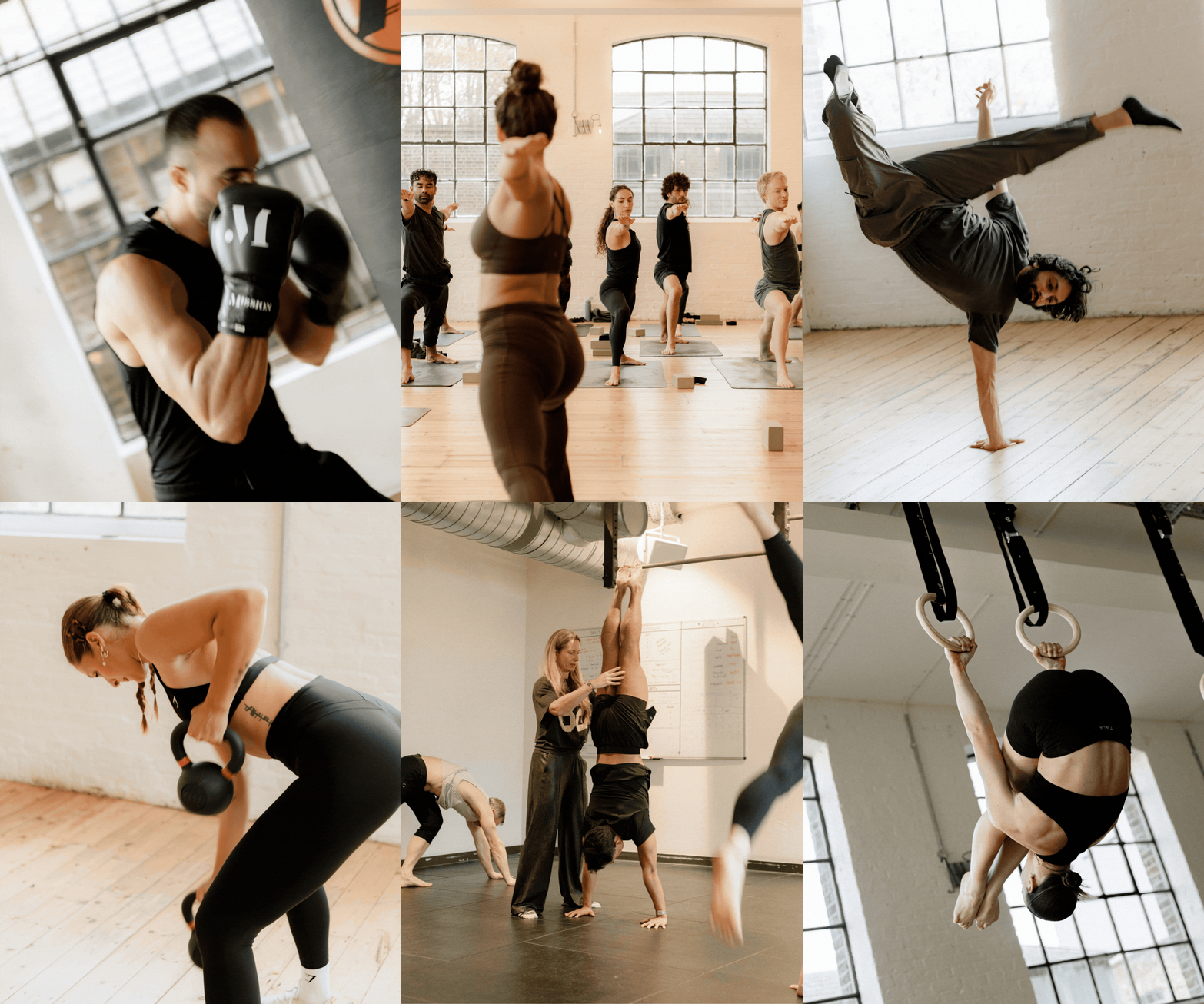
And this is a big part of why we built Mission the way we did. You can practise yoga here — deeply, seriously and often — but you can also build strength through Calisthenics, work specifically on mobility, box, handstand, recover, and explore completely different ways of moving your body.
Perhaps what we’re witnessing is the next chapter for yoga: not replacing the practice, but understanding where it sits within a broader approach to how we move, how we age and how we take care of ourselves.
Yoga has always evolved.
And it will continue to do so.